Materials Chemistry
Formulating circular sulfur copolymer pavements via TEOA-catalyzed inverse vulcanization with photothermal self-healing crack recovery.
Hi I am,

Materials Science, Embedded Linux & Spatial Simulation.

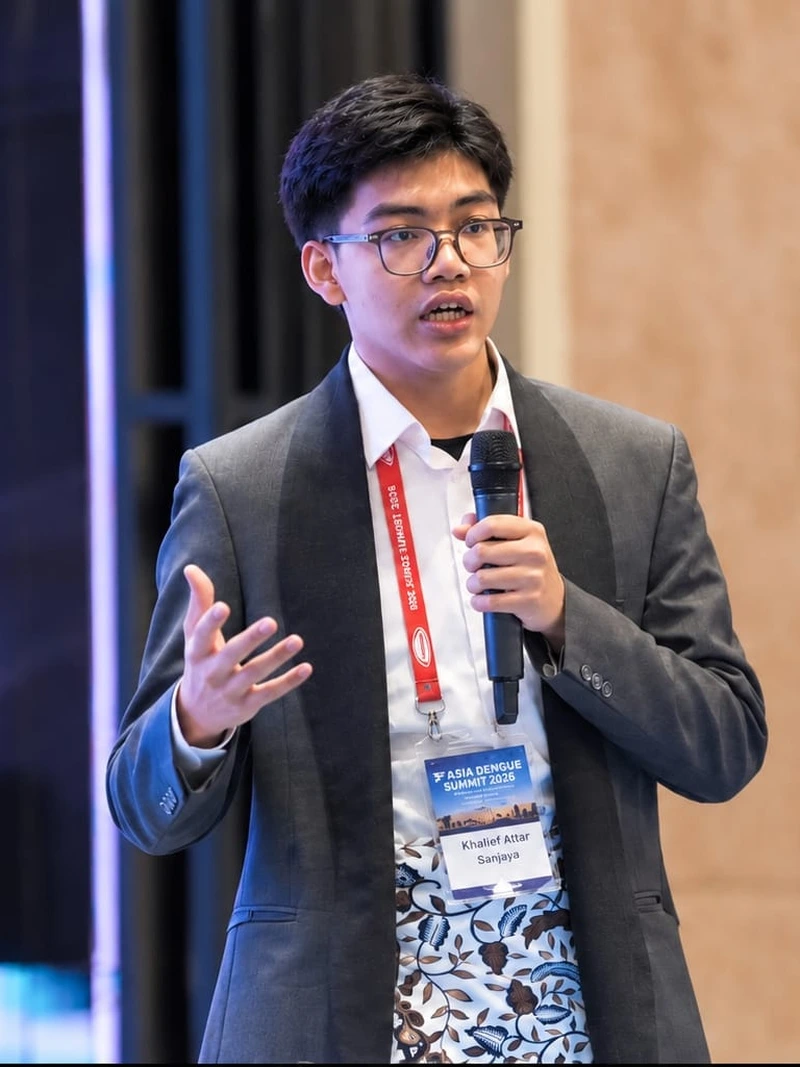
Hi, I'm Khalief Attar Sanjaya, but you can call me Attar! I'm a high school student at SMAN 107 Jakarta, Indonesia, passionate about materials chemistry and software architecture, and their potential to address real-world engineering challenges. My interests span polymer chemistry, low-level Linux, game simulation, spatial GIS, and computer graphics. I enjoy transforming ideas into practical innovations, from circular self-healing sulfur pavements in ATLAS and off-grid Linux servers in SEMAR to deterministic game simulations in NeuroFall and spatial epidemiology in NIRA.
Beyond research, I'm the two-term Chairperson of the computing club at SMAN 107 Jakarta, empowering peers to explore programming and create practical software. I enjoy leading technical workshops, mentoring 35+ students, and fostering collaborative problem-solving. My journey has also led me to national and international recognition across materials science, game physics, and spatial computing, including winning 1st Place nationally at the KRAFTON Better Ground Challenge in Seoul, South Korea, alongside defending our vector epidemiology model as Indonesia national champion at the 9th Asian Dengue Summit in Singapore.
Looking ahead, I aspire to pursue Materials Science and Systems Engineering, particularly at the intersection of polymer chemistry, embedded hardware, and deterministic simulation. I believe innovation goes beyond creating something new. It's about understanding how physical matter and digital logic interact from first principles, challenging what's possible, and developing technology that is rigorous, resilient, and built to endure.
Formulating circular sulfur copolymer pavements via TEOA-catalyzed inverse vulcanization with photothermal self-healing crack recovery.
Porting headless Armbian OS onto decommissioned ARM SoCs and deploying offline Wi-Fi mesh learning servers for remote schools.
Architecting hierarchical finite state machines (HFSM) and GLSL shaders maintaining 60 FPS in Godot 4.
Developing interactive 3D WebGL scene explorers with Three.js, Canvas mini-games, and client-side regional internationalization.
Constructing density-based spatial epidemiological models with Leaflet.js, paired with resilient PHP/MySQL backends and cloud DNS/SSL.
Directing engineering curriculums for 35+ developers across two elected terms, and translating scientific TED talks.








Visual decks & scientific paper authoring



Code editors, version control & server architecture



Engine runtimes, state machines & distribution




Microcontroller firmware & circuit simulation


Notebooks & empirical experimentation


Edge deployment, routing & backend databases

Engineering does not stop at software abstractions. Real impact happens when code touches the physical world.
Whether polymerizing sulfur byproducts into sustainable construction materials, fine-tuning state machines for psychological game narratives, or repurposing discarded silicon into offline school servers, my philosophy remains constant:
Understand the fundamental constraints of matter and energy, eliminate unnecessary friction, and build systems that are reliable, accessible, and measurable.
First-author scientific publications, competition-winning simulation engines, and distributed edge hardware prototypes.
National championships and international delegation defenses evaluated by industry engineers and clinical researchers.
Won first place nationally with NeuroFall out of 100+ secondary school engineering teams across Indonesia. Engineered cognitive state machines on Godot 4.4 HFSM architecture.
Selected under JA Asia to represent Indonesia in Seoul alongside student finalist teams from South Korea, Malaysia, and India. Showcased NeuroFall live at the international exhibition, exchanging technical game architectures and collaborating directly with top student creators across the four Asian nations, international developers, and KRAFTON leadership.
National STEM and computing research entry for Project SEMAR (Source of Education For Many Areas & Remote), repurposing discarded Android STBs into resilient offline LMS edge servers. Engineered custom file-based offline server architecture and autonomous ESP32 battery telemetry to deliver zero-packet-drop digital education across off-grid rural Indonesian classrooms.
Awarded National Champion (Juara 1) in digital healthcare as Lead Software Architect of Team Franky for Project NIRA, establishing an epidemiological vector telemetry engine to model Dengue fever outbreaks.
Selected as the official Indonesian Delegate to compete at the international Grand Final in Singapore, contending directly against national finalist teams from the Philippines, Singapore, Malaysia, and Thailand. Defended Project NIRA's predictive vector telemetry models and epidemiological GIS architecture live before global clinical researchers, medical scientists, and public health directors from around the world attending the 9th Asian Dengue Summit.
Awarded Juara 2 Best Game across the entire grade-level cohort at the SMAN 107 Jakarta P5 Kokurikuler Exhibition for Digisantara (3D WebGL / Spatial Educational Game), verified through live trials with 200+ students and evaluators.
Selected research competitor and finalist in sustainable circular energy for Project ATLAS (Self-Healing Sulfur Copolymer Pavement). Authored first-author preprint establishing TEOA-catalyzed inverse vulcanization at 80-120°C with complete toxic gas suppression and 41.8 MPa compressive strength in laboratory-scale testing, currently in the pre-field trial stage (belum uji lapangan, DOI: 10.26434/chemrxiv.15012077/v1).
Technical leadership, production engineering responsibilities, and verified academic credentials.
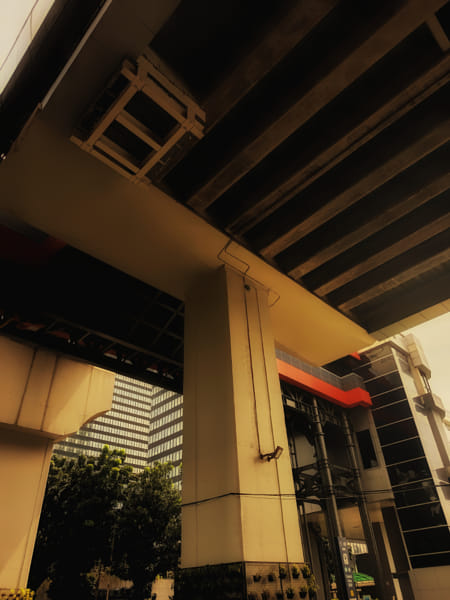
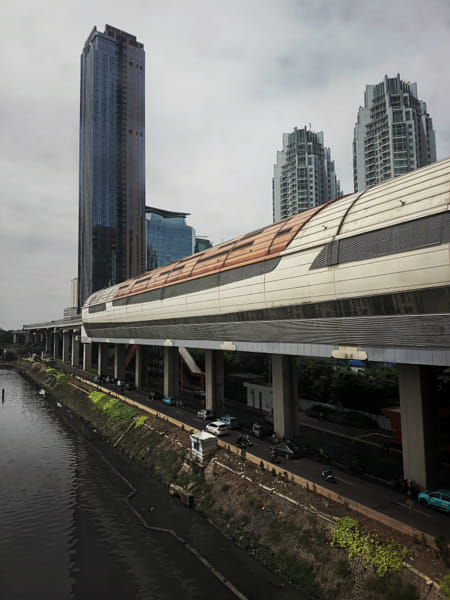
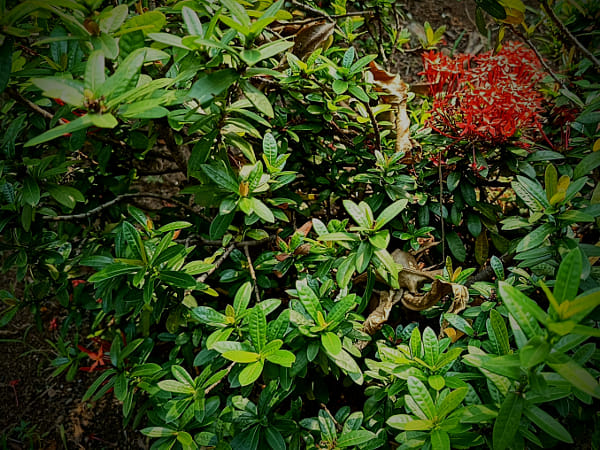
Curated 35mm and mobile perspectives capturing architectural geometry, atmospheric light, and moments of quiet stillness across Seoul and Jakarta.
Parallel to systems engineering and experimental research, photography functions as an empirical exercise in observation. Where distributed computing architectures solve for high algorithmic throughput, holding a lens demands the opposite: patience, spatial discipline, and absolute stillness.
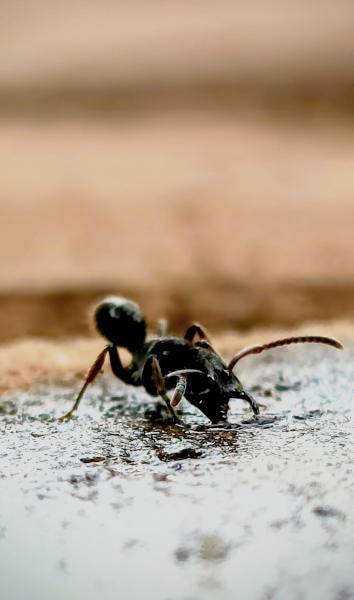
From the illuminated nocturnal eaves of Gyeongbokgung Palace in Seoul to raw brutalist concrete underpasses and transit corridors in Jakarta, each frame studies how ambient light carves through structural mass. Microscopic studies like the solitary ant drinking a single droplet of water anchor the series: finding patient precision alongside urban scale.